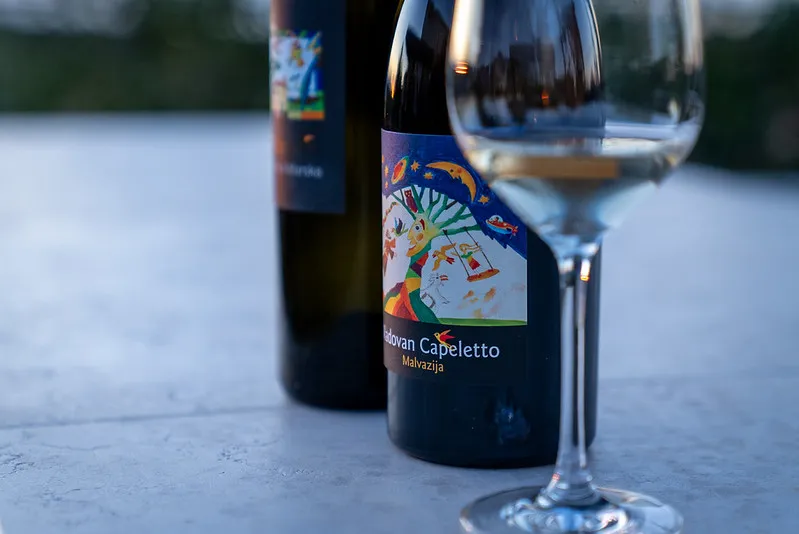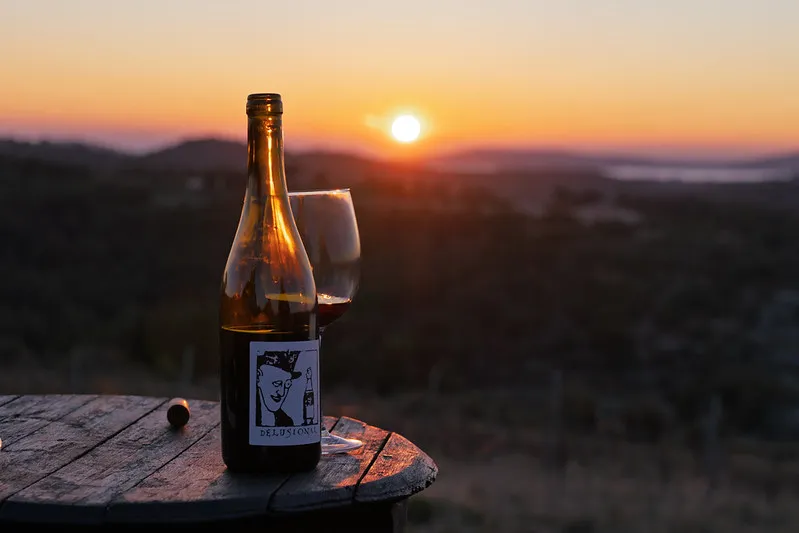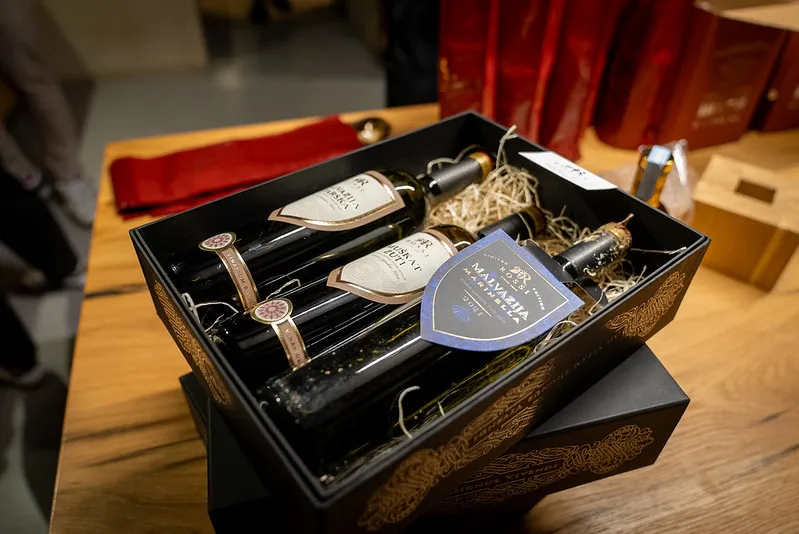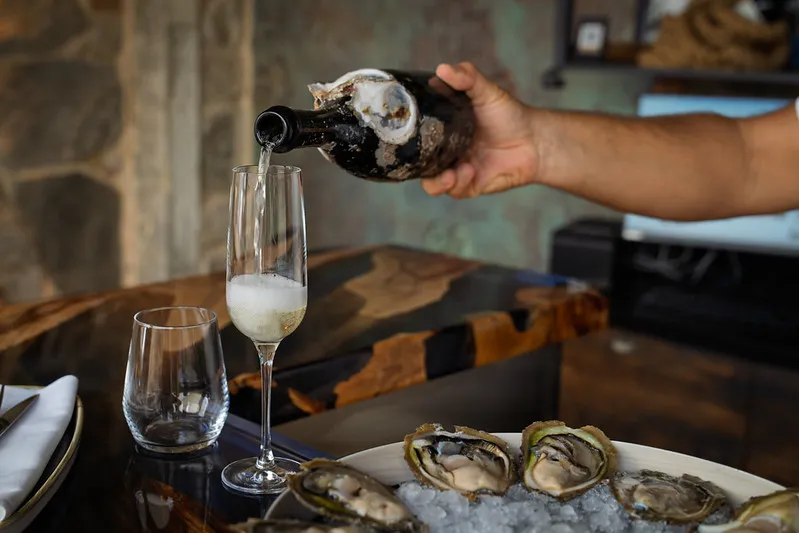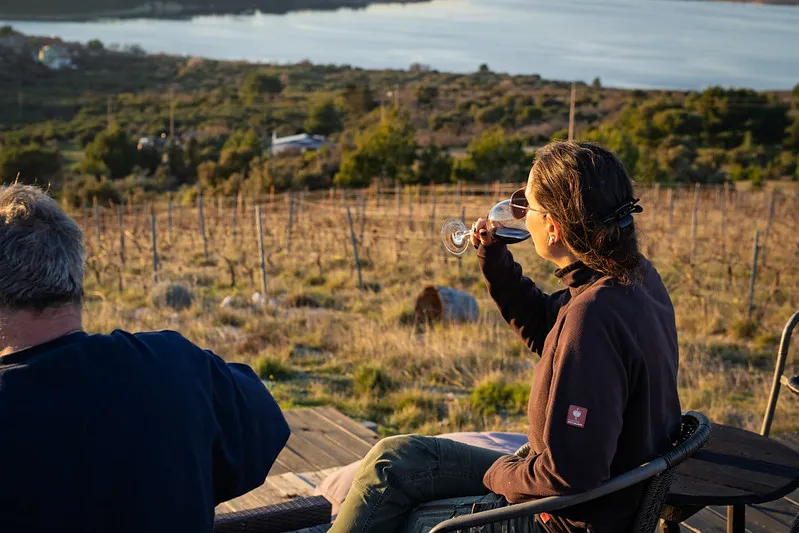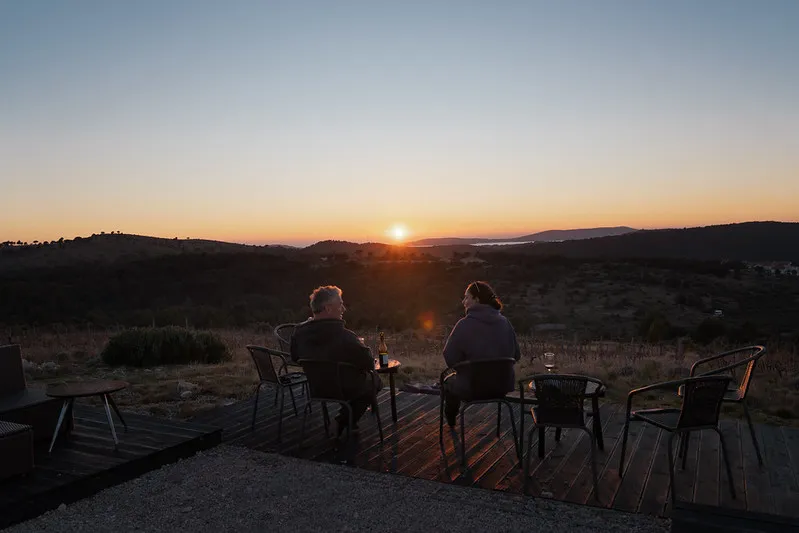
Dalmatian wine is genuinely different because the grapes are different. Plavac Mali, the dominant red on Pelješac, shares its DNA with Zinfandel — confirmed by UC Davis researchers in 2001 after a search that lasted years. Vugava grows only on the island of Vis and has no known genetic relationship to any other grape variety on earth. Grk survives in sandy soil near Lumbarda on Korčula that would kill most other varieties. None of this appears on standard wine lists, and very little of it reaches international markets.
The private experiences worth building a trip around aren’t at commercial tasting rooms. They’re at family estates that don’t advertise, poured by the people who made the wine.
Key takeaways:
- Pelješac produces Croatia’s most acclaimed red: Plavac Mali from the Dingač and Postup appellations, with Miloš, Saints Hills, and Grgić Vina as the producers to know
- Hvar grows Pošip and Bogdanuša, two whites found almost nowhere else; Carić and Duboković are worth seeking out specifically
- Vis is home to Vugava, produced in tiny quantities and almost entirely consumed on the island itself
- Private cellar access requires relationships or introductions, not an online booking link
- September harvest is when the real meals happen; June and July are better for tasting the whites in context
What makes Dalmatian wine worth a dedicated trip
The case starts with the grapes themselves.
In 2001, a team from UC Davis led by researcher Carole Meredith confirmed that Crljenak Kaštelanski, a nearly-extinct Croatian variety from the vineyards around Kaštela near Split, is genetically identical to both Zinfandel and Primitivo. The grape had survived in Croatia while becoming famous in California and Italy under different names. That discovery reframed Croatian wine entirely for the international market.
Mike Grgich was born Miljenko Grgić in Desne, a village near the Neretva delta in Dalmatia. He emigrated to the US, worked at Château Montelena, and gained international recognition when his 1973 Chardonnay beat the French in the 1976 Paris tasting — the Judgment of Paris. He returned to Croatia and founded Grgić Vina on Pelješac with his nephew Ivo, specifically because of the Zinfandel connection. That story alone makes Pelješac worth visiting for anyone serious about wine.
Beyond the history, the climate and soils produce wines that taste like nowhere else. The Dingač appellation on Pelješac, designated in 1961 as one of Croatia’s first protected wine origins, covers a small area of south-facing limestone terraces above the sea. The sun exposure is extreme. The grapes develop slowly and produce wines with structure and concentration that can age for decades.
Pelješac: Plavac Mali and the Dingač appellation
Dingač is the name most people have heard. Postup is the appellation to its west, less well-known outside Croatia, and arguably producing more approachable wines that drink better young.
Plavac Mali is the grape. The name means small blue, which describes the berry. It’s high in tannin, high in alcohol when fully ripe, and quite closed when young. A Dingač from a serious producer needs five to seven years to open. Most visitors who buy a bottle and open it that evening are drinking it too soon.
The producers worth knowing:
Miloš makes the most austere style on Pelješac. The wines are not built for immediate pleasure. The family has been growing Plavac Mali on Dingač for generations and the approach hasn’t changed — long maceration, extended barrel aging, patience. Their Stagnum is the flagship. It needs time.
Saints Hills takes a different direction. The winery was founded by Andro Tomić and the winemaking brought in international consultation. The wines are more approachable, better suited to guests who want to drink now rather than wait. The Dhruva is the label to look for.
Grgić Vina on Pelješac produces Plavac Mali that connects two wine worlds explicitly. The Mike Grgich connection makes it a pilgrimage destination for American wine travelers who know the Judgment of Paris story. The cellar is in Trstenik on the north side of the peninsula.
None of these producers have a website with an online booking form for tastings. Miloš and Grgić Vina both require appointments. Saints Hills is slightly more accessible but still not a walk-in operation in peak summer. The right introduction matters. For context on how we arrange cellar access, see our food and wine itinerary planning.
Hvar: the island whites
Hvar produces reds as well, but the wines that reward attention are the whites.
Pošip grows across Dalmatia, but the Hvar version has its own character — fuller bodied than the Korčula equivalent, with an aromatic quality that comes from the island’s combination of altitude, wind, and rosemary-covered hillsides. It’s a wine that makes sense with the food: grilled fish, octopus salad, the kind of lunch that takes two hours.
Bogdanuša is different. It’s lighter, more mineral, almost saline in the best versions. It grows almost exclusively on Hvar and production is small enough that it rarely leaves the island. You drink it there or you don’t drink it.
Prč is the rarest variety on Hvar. A few producers are keeping it alive — small quantities, no international distribution. If you see it on a menu or in a cellar, it’s worth trying specifically because most wine travelers never get the chance.
Carić Winery in Jelsa is a family operation with a serious approach to Pošip and a willingness to receive guests who contact them in advance. Duboković, also in Jelsa, produces clean, mineral Pošip that’s among the best we’ve come across on the island over twenty years of working here.
Both require appointments. Both are worth the effort.
Vis: Vugava and why it matters
Vugava grows only on Vis. DNA analysis has found no genetic connection to any other known grape variety. The leading theory is that it arrived with ancient Greek colonizers who settled Vis, then called Issa, in the 4th century BC. If that’s true, Vugava has been growing on this island continuously for 2,400 years.
Production is tiny. Most of it is consumed on the island itself, which means the best way to taste Vugava is to be on Vis. It’s pale, aromatic, light in alcohol by Dalmatian standards, and completely unlike anything else in the region.
Lipanović is the producer most associated with serious Vugava. Roki’s, known mainly for its food, also produces Vugava and serves it at the restaurant in Plisko Polje. Getting to Plisko Polje requires either a car or a taxi from Komiža — it’s inland, away from the coast, in a small valley that feels removed from the island’s tourist economy.
Pošip also grows on Vis, with a character notably different from the Korčula or Hvar versions. The maritime influence is stronger. The wines taste of salt and stone in a way that makes the comparison with other Pošip interesting.
Vis is accessible by ferry from Split, roughly two and a half hours. In summer, high-speed catamarans cut that to 50 minutes. The ferry is the experience. The island rewards visitors who plan to stay at least three nights. For a one-day stop, you see the surface.
How private cellar access actually works
There is no booking button.
Most family producers in Dalmatia don’t have functioning websites, let alone online tasting reservation systems. The ones who do are often the commercial operations, which is fine, but not what we’re describing here.
Access to the producers worth knowing works through direct contact in Croatian, a local introduction, or an agency that has already established the relationship. We’ve been working with producers on Pelješac, Hvar, and Vis since 2005. That’s twenty years of turning up, buying wine, and staying in touch. The introductions we make are the result of that, not of emailing a contact form.
What to expect when you get access: the winemaker or a family member pours, usually in the cellar or at a table outside. There may be food. There may not. The conversation is about the wine and the work. If you buy, there’s rarely a tasting fee. Some very small producers charge a modest per-person amount to cover their time and the wines opened.
September harvest week is different from all of this. The producers are in the vineyards, the cellar is running, and the meals that happen during picking are not formal events. Long tables, family food, the wine that isn’t ready yet tasted from the barrel. This is the visit that clients remember most. It requires planning well in advance and the right contact on the ground.
The konoba question
A konoba is a traditional Dalmatian tavern, almost always family-run. The ones worth seeking out don’t appear on TripAdvisor or in any AI-generated restaurant guide. They operate for regulars, and for guests who arrive through an introduction.
The experience in a genuinely local konoba — wine poured from an unlabeled carafe by the person who made it, food cooked the same morning from whatever came in from the sea or the garden — is something that a restaurant review can describe but can’t create. It exists in a specific social context. Getting there requires someone who already has the relationship.
Pelegrini in Šibenik, run by chef Rudi Stefan, is the regional high point for contemporary Croatian cuisine with serious local wine pairing. It operates at the level of the best restaurants in any European city and it’s our most consistently recommended fine dining experience in the region. That’s a different category from a family konoba, but worth knowing because the wine program at Pelegrini covers producers most visitors never encounter.
For a curated approach to building a wine-focused itinerary across Pelješac, Hvar, and Vis, get in touch with your dates and interests. The producers, the cellars, and the konoba introductions we arrange are different depending on the time of year.
FAQ
What grapes are unique to Dalmatia? Several Dalmatian varieties grow nowhere else. Vugava exists only on Vis. Grk grows only in the sandy soils around Lumbarda on Korčula. Bogdanuša is almost exclusive to Hvar. Plavac Mali, the dominant red on Pelješac, is the parent variety of Zinfandel, confirmed by UC Davis DNA analysis in 2001.
Which Pelješac wine producer is worth visiting? Miloš, Saints Hills, and Grgić Vina are the three most recognised producers. Miloš makes austere, age-worthy Plavac Mali. Saints Hills takes a more international approach. Grgić Vina was founded by Mike Grgich, the Dalmatian-born winemaker who gained international recognition at Grgich Hills Estate in Napa Valley. All three require appointments.
How do you arrange a private wine tasting in Croatia? Most family producers don’t have online booking. Access requires direct contact in Croatian, a local introduction, or an agency with an existing relationship with the producer. Walk-in visits in summer rarely produce the best experiences. September, during harvest, is when producers are most present and most willing to spend time with guests.
What is the best time to visit Croatian wine regions? September is the best month for wine-focused travel in Dalmatia. Plavac Mali harvest on Pelješac runs through the second and third week of the month. Pošip on Hvar and Korčula comes earlier, typically late August into early September. The harvest meals that happen during picking week are the hardest experiences to replicate at any other time of year.