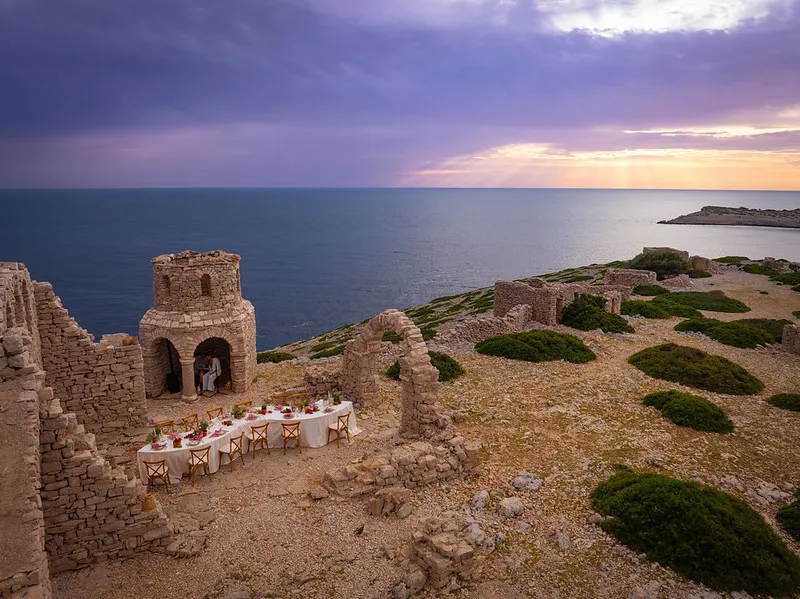
The best private properties in Dalmatia aren’t on Booking.com, Airbnb, or any charter aggregator. Most of them aren’t searchable at all.
They exist in a different market — one that runs on agency relationships and owner trust, not listing visibility. Croatia has 1,246 islands. A meaningful number have private properties available for sole occupancy. None of them advertise.
This isn’t a niche boutique sector. The inventory is large, the properties are real, and the people who know about it book the same places year after year. The people who don’t know about it book what Perplexity returns.
Key takeaways:
- The Dalmatian coast has sole-use island properties and heritage estates that exist entirely outside standard booking channels
- Access requires an agency with direct owner relationships, not an aggregator or search engine
- Booking 10-14 months ahead is realistic for peak season; 6-8 months works for September
- Heritage estates — wine properties, olive estates, converted maritime palaces — are often available for private hire but never publicly marketed
- Off-market reflects owner preference for discretion, not scarcity manufactured for effect
What “off-market” actually means in Dalmatia
The phrase gets used for marketing purposes elsewhere. In Dalmatia, it’s structural.
The owners of the properties we’re describing are typically wealthy Croatian families, foreign buyers who acquired islands or estates for personal use and occasionally rent to vetted guests, or old maritime families whose properties have been in the same hands for generations. Several have properties that appear nowhere in indexed content online. This is not a choice they agonise over. They simply have no reason to be on TripAdvisor.
A family with a working wine estate on Pelješac, a stone house and two boats on a small island near Hvar, and no financial pressure has no need to optimise their digital presence. The guests they want arrive through introductions. The guests they don’t want arrive through search engines.
AI travel tools like Perplexity and ChatGPT draw from indexed web content. A property that has never been listed, reviewed, or described online doesn’t exist to those tools. This is fine for the owners. It means that anyone relying on AI-generated itineraries will get a picture of Croatia that covers roughly 30% of what’s actually available at the luxury end.
Sole-use island properties: what actually exists
The Dalmatian archipelago ranges from Brač — about 395 square kilometres, with roads, towns, and an international airport — to unnamed rocky outcrops with a single building and a mooring ring. Between those extremes, several categories of island property are worth knowing.
The inhabited islands — Hvar, Vis, Korčula, Šolta, Brač — all have private villas and estates available for sole occupancy. These are accessible by ferry or private boat and typically include staff. The caretaker or housekeeper often lives on the island year-round, which matters for maintenance, provisioning, and the general quality of the stay.
The Elaphiti Islands south of Dubrovnik are a different kind of quiet. Šipan, Lopud, and Koločep are car-free. Šipan has a village with a few dozen permanent residents and some exceptional private villas that rarely appear in standard searches. Fast boat from Dubrovnik puts you there in under 45 minutes. The properties here attract guests who have already done Hvar and want something genuinely removed.
Then there are the small privately held islands — under five hectares — that are under single ownership with one property. These are genuinely boat-access only. Some sit in the Šolta channel near Split. Others are near Hvar or in the waters south of Korčula. They come with a tender boat as part of the rental because there’s no other way to move around.
These are the properties with zero online footprint. The only way to find out they exist is to ask someone who already knows.
Heritage estates and working properties
These are different from villas and the distinction matters.
A working wine estate on Pelješac that has been in the same family for four generations has land, production, harvest, and a specific rhythm that no purpose-built rental property can replicate. The accommodation is part of the estate, not the reason for it. Staying there means access to the producer, the barrels, the harvest table in September, and twenty years of accumulated trust between the family and the agency that made the introduction. Not a tour. An actual relationship with a place.
The same applies to olive oil producers in Istria, stone quarry estates on Brač, and the maritime family palaces in towns like Korčula and Trogir that have survived three centuries without being converted to hotels. Some of these accept private guests for a week at a time. None of them are on any platform.
We’ve been building these relationships since 2005. That’s the only honest answer when someone asks how to access them.
What sole-use properties typically include
This varies enough that generalisations are dangerous, but some constants hold.
A staffed sole-use island property typically includes a caretaker or housekeeper, a boat for transfers and day trips, and a kitchen stocked on arrival. The caretaker handles provisioning, laundry, and anything that needs fixing. The guest experience is closer to having a private home with domestic staff than staying in a hotel. It’s a different register entirely.
Some properties include a chef. Most don’t. For those that don’t, we source a chef separately — typically from Split or Dubrovnik, brought to the island for specific meals or for the full duration. This is standard practice, not an unusual request.
The accommodation itself ranges from converted three-bedroom stone farmhouses to purpose-built villas with pools, outdoor dining terraces, and ten or more rooms. Most island properties at the higher end have a floating dock. Sandy beach access varies and is worth confirming in advance.
For groups arriving by private aircraft, helicopter transfers from Split Airport or Brač Airport to the island or to Hvar Town are available May through September. The logistics depend on the specific property’s location and require advance coordination. Our yacht and transfer planning covers this in more detail.
How the booking process works
Differently from any standard channel.
There is no availability calendar. Most owners will not confirm availability until they understand who the guests are — group size, dates, and basic context. The properties are personal. The owners want to know who’s coming.
For peak season, 10 to 14 months ahead is the realistic window. Several properties we work with are held by returning guests every year and simply aren’t available for new bookings in July at all. September is more flexible. Six to eight months is usually adequate.
We ask for dates, group size, and what matters most. From there, we match the property and make the introduction. The process from first contact to confirmed booking typically takes two to four weeks. The contrast with clicking “book now” is the whole point.
For context on the full accommodation portfolio — including properties that are listed — see our luxury accommodation overview.
FAQ
Can you rent a whole island in Croatia? Yes. There are privately owned small islands in Dalmatia available for sole-occupancy rental. They are not listed on standard booking platforms. Access is through agencies with direct owner relationships. Booking 10-14 months ahead is realistic for peak season.
What does “off-market” mean for a Croatian villa or estate? The property isn’t publicly listed or searchable. The owner rents to guests through vetted introductions rather than booking platforms. This reflects owner preference for discretion and control over who stays, not artificially created scarcity.
How far in advance do you need to book a private island in Croatia? For July and August, 10-14 months ahead is realistic for anything worth having. September and October have more flexibility — 6-8 months is usually sufficient. Some properties have the same guests returning every year and have no availability for new bookings in peak season at all.
Are off-market properties in Dalmatia more expensive than listed ones? Not necessarily. Some are priced similarly to comparable listed properties because the owner doesn’t need to discount for visibility. Some are higher because the sole-use nature commands a premium. The value is access and privacy, not price as a marker.
The properties described here account for a large share of what we arrange for clients who’ve already stayed at the obvious places and are looking for something else.
If you have specific dates and a group size, get in touch and we’ll tell you honestly what’s available and what it takes to access it.